


Did you know that over 80% of Chinese cuisine utilises vinegar in some form? Black vinegar, with its unique, complex flavour, is a staple in many of these dishes. But what happens when you’re in the middle of cooking and realise you’re out of this essential ingredient? Don’t worry! There are several excellent black vinegar substitutes that can help you achieve a similar taste profile without missing a beat.
What is Black Vinegar?
Before we dive into substitutes, let’s understand what makes black vinegar special. Originating from China, it’s typically made from fermented rice, wheat, barley, sorghum, or millet. Unlike Western vinegars, which are primarily acidic, black vinegar boasts a rich, malty, slightly sweet, and tangy flavour with hints of umami. It’s often described as having smoky, molasses-like notes. Its dark colour comes from the ingredients and the fermentation process.
Why You Might Need a Substitute
Several reasons might lead you to seek a black vinegar substitute:
- Availability: Black vinegar might not be readily available in all local grocery stores.
- Dietary Restrictions: Some commercial black vinegars contain gluten, making them unsuitable for those with celiac disease or gluten sensitivity.
- Flavor Preference: While beloved by many, its distinct taste might not be for everyone in every dish.
- Experimentation: Culinary exploration often leads to improvising with ingredients.
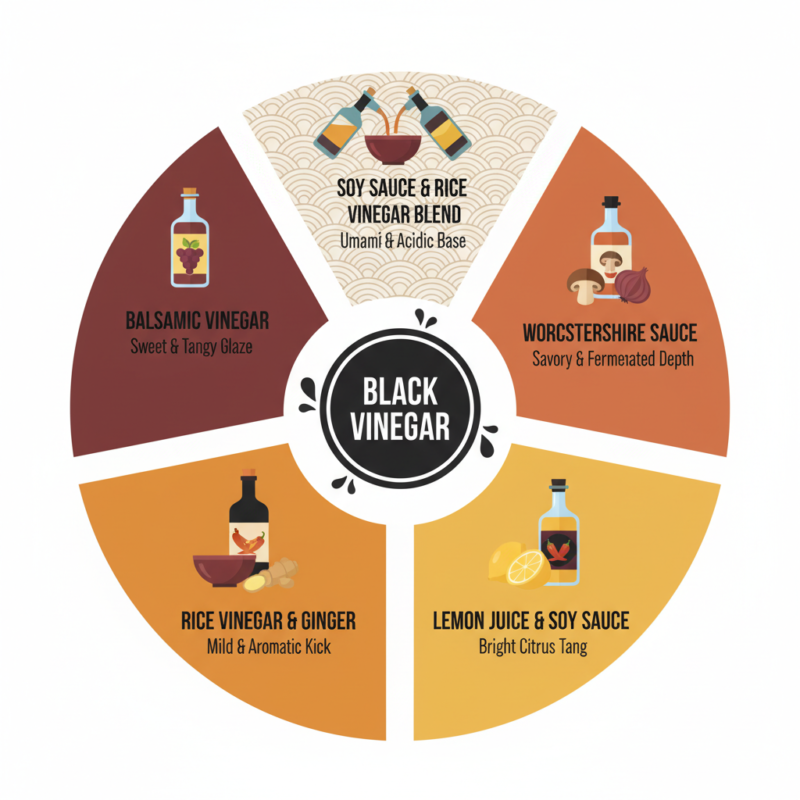
Top 6 Black Vinegar Substitutes
Finding the right substitute depends on the dish you’re preparing. Here are six fantastic options:
1. Balsamic Vinegar
Why it works: Balsamic vinegar shares some similarities with black vinegar, particularly its sweetness and depth of flavor. High-quality balsamic vinegars can have a complex, slightly fruity, and even molasses-like character. It also has a dark color, which can be visually similar.
How to use it: For every tablespoon of black vinegar called for, use one tablespoon of balsamic vinegar. You might want to add a tiny pinch of sugar to balsamic if your recipe relies heavily on black vinegar’s sweetness, or a splash of soy sauce for that extra umami depth. It’s particularly good in marinades and salad dressings.
2. Soy Sauce and Rice Vinegar Blend
Why it works: This combination aims to replicate the salty, umami, and tangy notes of black vinegar. Soy sauce provides the saltiness and umami, while rice vinegar offers the necessary acidity.
How to use it: A good starting ratio is 2 parts soy sauce to 1 part rice vinegar. For example, if a recipe calls for 1 tablespoon of black vinegar, use about 2 teaspoons of soy sauce and 1 teaspoon of rice vinegar. Adjust the ratio based on your taste preference. This blend is excellent for stir-fries and dipping sauces.
3. Worcestershire Sauce
Why it works: Worcestershire sauce is a fermented condiment that offers a complex flavor profile with tanginess, sweetness, umami, and a hint of spice. Its depth can mimic some of the characteristics of black vinegar.
How to use it: Use it sparingly as it has a stronger flavor. A common substitution is 1 part Worcestershire sauce to 1 part water or soy sauce. For instance, for 1 tablespoon of black vinegar, you could use 1 tablespoon of this diluted mixture. It works well in marinades and stews.
4. Red Wine Vinegar with a Touch of Sweetener
Why it works: Red wine vinegar provides a good level of acidity. By adding a sweetener, you can approximate the balance of flavors found in black vinegar.
How to use it: Use 1 tablespoon of red wine vinegar mixed with 1/2 teaspoon of sugar or honey. Stir until the sweetener is dissolved. This substitute is best for dishes where the vinegar’s acidity is more prominent than its other complex notes, like in some vinaigrettes.
5. Apple Cider Vinegar with Molasses
Why it works: Apple cider vinegar offers a fruity tang, while molasses brings in the dark color and a hint of that characteristic sweetness and depth. This is a closer match for the flavor profile.
How to use it: Combine 1 tablespoon of apple cider vinegar with 1/2 teaspoon of molasses. Stir well. This is a great substitute for marinades and braised dishes where you want that rich, dark flavor.
6. Coconut Aminos
Why it works: For a gluten-free and soy-free option, coconut aminos are a fantastic choice. They are made from fermented coconut sap and have a naturally sweet and savory flavor with a lower sodium content than soy sauce.
How to use it: Coconut aminos can often be used as a 1:1 substitute for soy sauce. To mimic black vinegar, you can blend 2 parts coconut aminos with 1 part rice vinegar or apple cider vinegar. This provides the necessary tang and complexity. This is ideal for those with specific dietary needs.
Expert Insights
Culinary experts often emphasize the importance of balance when substituting ingredients. Chef Anya Sharma notes, “The key to a successful substitution is understanding the role the original ingredient plays in the dish. Black vinegar brings acidity, sweetness, and umami. Your substitute should aim to replicate at least two of these, often with a slight adjustment elsewhere in the recipe to compensate.”
Finally
Running out of black vinegar doesn’t have to derail your cooking plans. With these six versatile substitutes, you can confidently recreate the complex flavors of your favorite dishes. Whether you opt for the familiar tang of balsamic or the balanced blend of soy sauce and rice vinegar, remember to taste and adjust as you go. Happy cooking!