
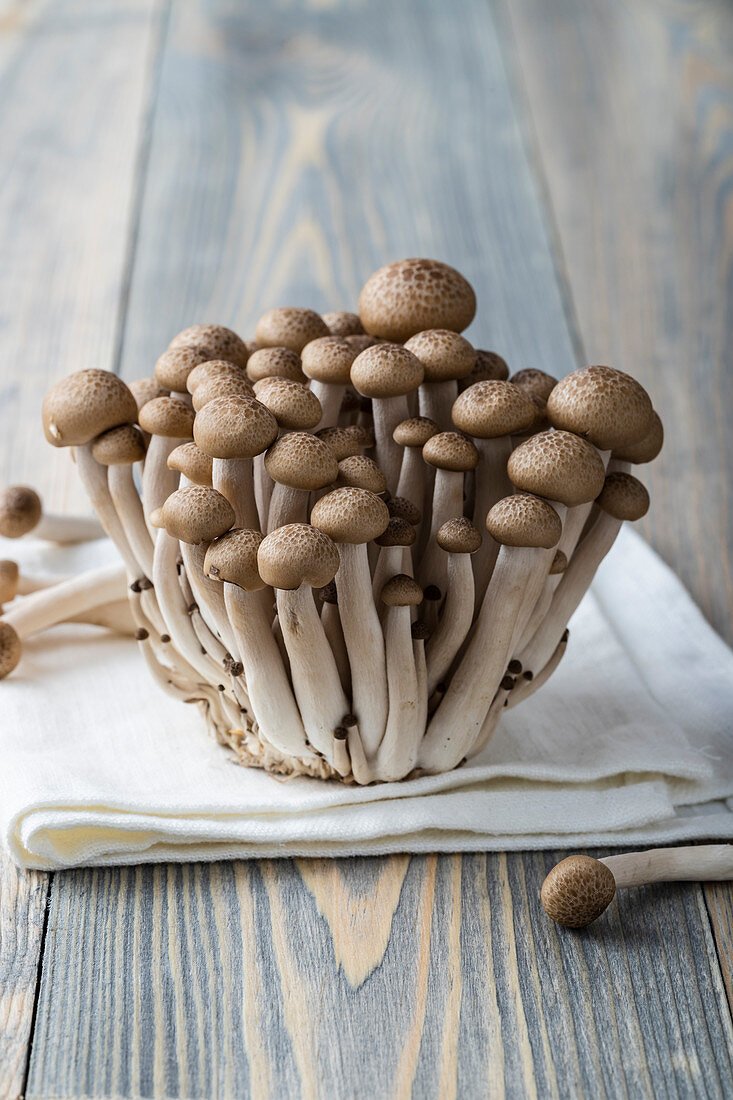

Ever picked up a tight little bundle of mushrooms that looks like a mini bouquet? Shimeji mushrooms are exactly that, neat clusters with slim stems and small caps, often seen in supermarkets and Asian grocers. They’re popular in Japanese cooking because they stay pleasantly firm and soak up savoury flavours.
So, what exactly are shimeji mushrooms?
In shops, “shimeji” usually isn’t one single wild mushroom. It’s a group name used for cultivated mushrooms sold in ready-to-cook clusters, most often the beech mushroom varieties. They’re grown in controlled conditions, which is why they look so consistent from pack to pack.
You’ll notice they’re sold as a bunch joined at the base. That’s because they grow tightly together from a growing block, so they’re harvested as a clump and packed the same way. At home, you trim off the dense base and pull the stems apart, like separating a bunch of grapes.
Common types you will see: white beech and brown beech (bunapi and buna-shimeji)
- White beech (bunapi): creamy-white stems and caps, usually in a compact plastic pack. Flavour is milder and slightly sweet once cooked.
- Brown beech (buna-shimeji): light to medium brown caps with pale stems, often in the same style of pack. Taste is more nutty and savoury.
In many UK shops, both are simply labelled “beech mushrooms”.
How to recognise them at a glance
Look for long, thin stems, small, rounded caps, and a tight bunch growing from one base. Fresh shimeji mushrooms smell clean and earthy, not sharp.
Skip packs with slimy stems, a strong sour smell, or dark wet patches on the cluster.
Flavour, texture, and why cooking them matters
Raw shimeji mushrooms can taste bitter, and they’re not pleasant to eat uncooked. Cooking fixes that, and it also makes them easier to digest. Once heated through, they turn savoury with a gentle nuttiness, and the texture stays firm with a light crunch.
Prep is simple: trim off the hard base, separate the stems, then cook. Rinse only if they look gritty, and dry well so they brown instead of steaming. Cook them until they’re hot and tender, with no raw bite left.
Best ways to cook shimeji mushrooms at home
- Stir-fry: high heat, 3 to 5 minutes, add at the end to keep them springy.
- Sauté: butter plus soy sauce makes a fast, savoury side.
- Soups and ramen: drop in for the last few minutes so they stay bouncy.
- Roast: coat lightly with oil, roast until browned at the edges.
They pair well with garlic, spring onions, miso, soy sauce, sesame, noodles, rice, eggs, and tofu.
How to store them so they stay crisp
Keep shimeji mushrooms in the fridge, in the original pack (or a paper bag). Avoid sealing them airtight if there’s moisture inside. Use within 5 to 7 days. Don’t wash them until just before cooking.
Good substitutes and when to use them
- Oyster mushrooms: quick to cook, a similar light bite.
- Chestnut mushrooms: more earthy, best sliced.
- Shiitake: stronger flavour, slice thin for faster cooking.
Enoki look similar, but they cook faster and stay more delicate.
Conclusion
Shimeji mushrooms are clustered beech mushrooms loved in Japanese cooking for their firm texture and savoury flavour. White beech is mild, brown beech is nuttier, and the key rule is simple: cook them. Try a quick sauté with soy and garlic, or toss them through noodles, then tweak flavours until you find your favourite combo.