
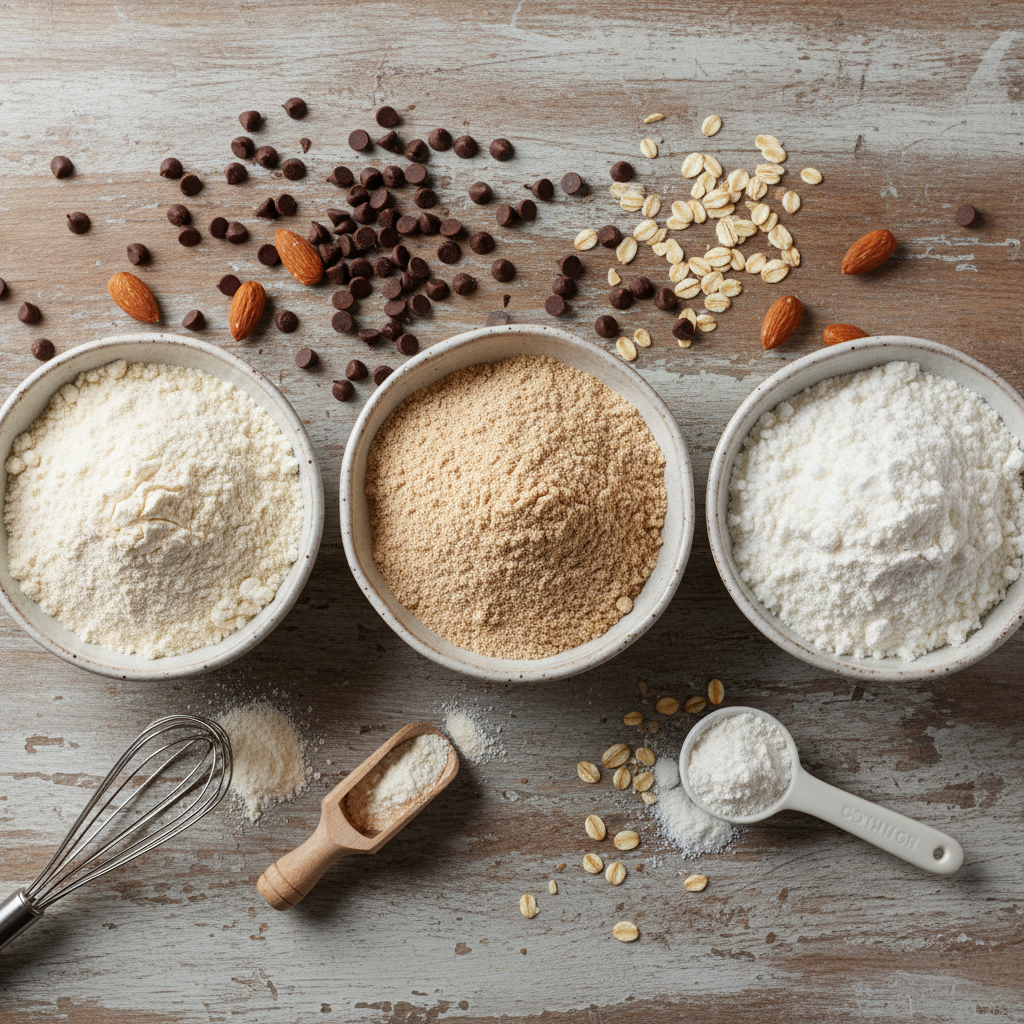

Did you know that the global gluten-free market is projected to reach over $11 billion by 2027? This growing demand highlights the need for delicious gluten-free alternatives, especially for beloved treats like chewy cookies. While baking without traditional wheat flour can seem daunting, the right gluten-free flour can mimic the texture and flavour you crave. Let’s explore five top contenders that will elevate your gluten-free cookie game.
1. Almond Flour: The Nutty Powerhouse
Almond flour, made from finely ground blanched almonds, is a fantastic choice for chewy cookies. It’s rich in healthy fats and protein, which contribute to a tender crumb and a satisfying chew. Its slightly nutty flavor pairs wonderfully with chocolate chips, caramel, and other classic cookie additions.
- Pros: Adds moisture and richness, good source of nutrients, pleasant flavour.
- Cons: Can be denser than other flours, requires careful measurement to avoid greasiness.
- Tip: For extra chewiness, consider combining almond flour with a starch like tapioca or cornstarch.
2. Oat Flour: Wholesome and Versatile
Certified gluten-free oat flour offers a wonderfully wholesome and slightly sweet flavour. It absorbs moisture well, contributing to a chewy texture without becoming gummy. Ensure you purchase oats specifically labelled “certified gluten-free” to avoid cross-contamination if you have celiac disease or a severe gluten sensitivity. You can even make your own by grinding certified gluten-free rolled oats in a high-powered blender.
- Pros: Mild flavor, good for chewy textures, widely available.
- Cons: Can sometimes result in a slightly crumblier cookie if not balanced with other ingredients.
- Tip: Using a mix of oat flour and a binder like a flax egg or psyllium husk can enhance chewiness.
3. Coconut Flour: The Moisture Absorber
Coconut flour is known for its incredible ability to absorb liquids, which can be a double-edged sword. Used in small amounts, it contributes to a chewy, cake-like texture. However, too much can lead to dry, crumbly cookies. It has a distinct coconut flavour that can be delightful in certain recipes.
- Pros: High in fibre, unique flavour, creates a tender interior.
- Cons: Very absorbent, requires more liquid in recipes, can be drying if overused.
- Tip: Always start with a smaller proportion of coconut flour and adjust as needed, often in combination with other gluten-free flours.
4. Brown Rice Flour: A Neutral Base
Brown rice flour provides a neutral flavour and a slightly chewy texture, making it a versatile base for many cookie recipes. It’s a whole grain flour, offering more fibre and nutrients than white rice flour. When combined with other gluten-free flours, it helps create a well-balanced cookie.
- Pros: Neutral flavour, good source of fibre, widely available.
- Cons: Can sometimes be gritty if not finely ground, may benefit from being blended with other flours for optimal texture.
- Tip: Blending brown rice flour with a bit of tapioca starch or sweet rice flour can improve its chewiness and reduce grittiness.
5. Gluten-Free All-Purpose Flour Blends: The Convenient Choice
Many commercially available gluten-free all-purpose flour blends are specifically formulated to mimic the properties of wheat flour. These blends often contain a mix of rice flours, starches (like tapioca or potato starch), and sometimes xanthan gum, which acts as a binder. They are a convenient option for consistent results.
- Pros: Convenient, designed for easy 1:1 substitution, often includes binders.
- Cons: Quality can vary between brands, some blends can be too starchy or dense.
- Tip: Look for blends that list a good proportion of whole grain flours and starches for a chewier cookie.
For those who love a good cookie, exploring these gluten-free options can open up a world of delicious possibilities. Remember that experimenting with ratios and combinations is key to finding your perfect chewy gluten-free cookie! If you’re looking for a fantastic recipe to start with, check out these Kitchen Sink Cookies – you can adapt them with your favorite gluten-free flour blend!
Frequently Asked Questions
What is the best gluten-free flour for chewy cookies?
While “best” is subjective, almond flour, oat flour, and well-formulated gluten-free blends are often cited for their ability to produce chewy gluten-free cookies due to their fat content and moisture-absorbing properties.
Can I substitute gluten-free flour 1:1 for regular flour?
Many gluten-free all-purpose flour blends are designed for 1:1 substitution. However, single-ingredient flours like almond or coconut flour will require recipe adjustments due to their different properties.
What makes cookies chewy?
Chewiness in cookies is often attributed to a higher ratio of brown sugar to white sugar, the presence of eggs (especially egg yolks), and sufficient fat. In gluten-free baking, the choice of flour also plays a significant role.
How can I make gluten-free cookies chewier?
To enhance chewiness, consider using ingredients like almond flour or oat flour, slightly underbaking the cookies, and using a blend of sugars that includes more brown sugar. Adding ingredients like molasses can also help.